Showing posts with label Personal Finance. Show all posts

Tuesday, March 10, 2015

First step to financial freedom


It’s time to take the first step to your financial freedom. The most important financial decision of your life needs to be made right now! It’s time for you to decide to become an investor, not just a consumer. To do this, you simply have to decide what percentage of your income you will set aside for you and your family and no one else.

Save a fixed percentage each pay period, and then invest it intelligently, and over time you’ll start living a life where your money works for you instead of you working for your money. What percentage works for you? Is it 10%? Or 15%? Maybe 20%? There’s no right answer here – only your answer. If you’re looking for guidance on this, experts say you should plan to save at least a minimum of 10% of your income, although in today’s economy many agree 15% is a far better number, especially if you’re over the age of 40. But here’s the key to success: you have to make your savings automatic. The best way to save is when you don’t see the money in the first place.

Theodore Johnson worked hard and moved his way up in United Parcel Service (UPS). He never had more than$14,000 a year, but here’s the magic formula: he set aside 20% of every pay check he received and every Christmas bonus, and put it into company stock. Theodore eventually saw the value of his UPS stock soar to over $70 million by the time he was 90 years old. Pretty incredible? And the most incredible part is that he wasn’t a gifted athlete like Floyd Mayweather or a brilliant director like Francis Ford Copolla – or even a lofty corporate executive. He understood the power of compounding at such an early age that it made a profound impact in his life. At the end of his life, Johnson was able to do some meaningful things with all the money. He donated over $36 million to a variety of educational causes. He also set up a college scholarship fund.

By committing to a simple but steady code of savings, by drawing down on your income each pay period and paying yourself first, there’s a way to tap the power of compound savings and let it take you to unimaginable heights. As said by Amelia Earhart, “The most difficult thing is the decision to act, the rest is merely tenacity.” The foundation for creating wealth, the difference between a wage earner and an investor, and it starts with setting aside a portion of you income that you lock away automatically.

Do it automatically, such as the following:
  1.  If you get a regular payroll, you’ll most likely be able to set up an automated plan with a call to the human resources department, instructing it to send a specific percentage of your pay check directly to your retirement account.  
  2. If you’re self-employed, set up an automatic transfer from your checking account. If you don’t have a retirement account, open up a savings or retirement account with a bank or financial institution.

Sunday, March 8, 2015

The Power of Compounding


The power of compounding is the multiplying power of growth times growth. Compound interest is such a powerful tool that Albert Einstein once called it the most important invention in all of human history. To illustrate the exponential power of compounding:  Ray got a jump-start, opening a retirement account at the age of 20 and investing P4,000 annually for the next 20 years. At 40, he stopped funding the account but left the money to grow at the rate of 10% each year.

Razel didn’t start saving for retirement until the ripe age of 40. Like his brother, Razel invested P4,000 annually, also with a 10% return, but she kept at it until she was 65 – 25 years in all. In sum, Ray, the early starter, invested a total of P80,000 (P4,000 per year x 20 years at 10%), while Razel, the late bloomer, invested P100,000 (P4,000 per year x 25 years at 10%).

Which of the two siblings had more money in his/her account at the age of retirement?

In this example, it was Ray, who’d gotten the early start and stopped saving before his sister had even begun, who ended up with almost P2.5 million. And it was Razel, who’d saved all the way until the age of 65, who had less than P400,000. That’s a gap of over P2 million. All because Ray was able to tap into the awesome power of compounding for an additional 20 years, giving him an insurmountable edge.

Tuesday, February 10, 2015

Your Money Life


Money is “conscious,” which is to say, I make financial choices that reflects my values and awareness. When you make financial choices that honor your values, you can gracefully navigate the new economy in good times and bad. Conscious money begins with you. Not with your wallet, savings, home, possessions, or stock portfolio. It starts with your values, and with your state of consciousness about money.[i]


Choose your top values, i.e., accountability, creativity, freedom, hard work, hope, independence, integrity, love, loyalty, respect, security, simplicity, success, truth, wisdom, to name a few. How we hold our values powerfully influences our actions. If you honor integrity over success, you won’t feel the need to lie in order to do well in life. When you know what you stand for, you possess the clarity to take steps, including financial steps, that are congruent with your values.
 

Personal finance covers many different topics such as financial planning, budgeting, debt elimination, real estate, investing, estate planning, savings, financing education, wealth creation, and more. “Wealth” means the money that remains when you deduct expense from income.


Some basic principles of personal finance: 
  • Live below your means. The old expression “live within your means” has given too many people permission to spend every peso they earn.
  • Save - early and often. “Pay yourself first” is an old but excellent adage.
  • Be fully conscious about your expenses. Know what they are, and be certain that they reflect your values and priorities.
  • Have a clear financial goal. Find the needed discipline with a vivid picture of what you want and why you want it. Know your goals.

Napoleon Hill, in his book Think and Grow Rich, said that wealthy people create their great fortunes primarily with “Thought” and “Definite Major Purpose.” These success elements are “goals.”  First, he says, write out “your idea of success” and “major financial desire.” Your success, he emphasizes, depends on your “definiteness of purpose.” To achieve your goals, the power of your will – which is naturally activated – is when heart and head are in harmony. In goal setting, it’s important to have an end date, a “by when,” because it gives you a framework for your subsequent choices. For example, you might say, “I have no savings right now. I want to have P10,000 in the bank six months from now.” That statement covers point A and B and your timeline.

Let’s put your goal into action. Six months is about twenty-four weeks. You need to average at least P417 per week in savings. To achieve your desire, you might entertain several possibilities. Two immediately come to mind: reduce your expenses by P417 per week or grow your income by the same amount.


[i] Conscious Money, Patricia Aburdene, 2012

Friday, June 20, 2014

Plan Your Retirement


Retirement is one of the most important events in a person’s life. Enjoying a comfortable lifestyle once we reach our golden years is what most of us dream of. With this, early planning is the key in achieving your retirement goals, such as aspiring to retire in a house with a beachfront view or a farmland backdrop.

When it comes to retirement, the question of the amount of savings you have accumulated, or the income you need to maintain your standard of living. But there’s another subject that can be just as critical – the age of retirement. According to the latest Retirement Savings Assessment in the US, the average age at which people said they plan to retire was 64.5 years of age. More than one-third of those surveyed expect to work until 80 years old.

        Deciding when to retire depends on a complex mix of lifestyle preferences, changes in circumstances (such as annulment or widowhood), health considerations and financial readiness. To help pick your date, make the most of benefits to which you’re entitled and run the numbers to see whether your expenses will match up with your income. Research shows that the act of calculating what you need for retirement improves your chances of achieving retirement.

        If you plan to retire at age 60 and hoping to live 20 more years after retirement, you should start saving and building your fund at 40 years old. Take note though that the idea is to save as much as you can for your retirement fund, so starting earlier than 40 years old obviously has its advantage.
       
You also need to consider that the average life expectancy is getting longer as we all take vitamins, exercise, eat better, and learn how to control the diseases of aging like diabetes, blood pressure, and heart disease. The average man who is in good health today at age 50 can expect to still be here at 82. The average woman lives longer than man.

Preserving wealth is about your own retirement. You can’t wait until you’re 50 or even 40 to think about this period of life. This is one of the most important period of your life, but if you don’t take it seriously and include it in your long-term plans, reaching 70 could be financially painful and unpleasant.

        Here are the steps that you will put on tract to retire when you want:

  1. Set saving goals. Try to consistently save 10% to 15% of your salary in your retirement account. Starting early and saving regularly not only gives you the boost of compounding. GSIS and SSS retirement are some means to save, but you can’t rely on it since retirement benefits may be less with your desired spending amount upon retirement. Most retirement planners recommend that you save enough to replace about 70% to 80% of your preretirement household income to cover expenses to support your standard of living. Just keep in mind the effects of inflation in the purchasing power of your money in the future.

  1. Keep a balanced portfolio. Your retirement fund should include a diversified mix of stocks and a fixed-income component of bonds and cash. Stocks provide the growth to bolster your saving and combat inflation; the fixed-income investments protect against market losses. If you’re in your twenties, you can afford to allocate 80% of your portfolio to stocks. As you get closer to retirement, you’ll want to pare that side of your portfolio to 40% to 60%, depending on your risk tolerance, leaving the rest in bonds and cash. At least once a year, review and rebalance your portfolio so you have a proper proportion of cash, stocks and bonds.

Here is a story of how an old-age person changes his/her new retirement lifestyles. Imagine you are the one here:

“At 71, Juan has buried his wife, Juana, and decided that that their two-story, three-bedroom house was finally too much for him to maintain on his own. Juan was a rich man. Although Juan still enjoys a round of golf once a week and attends health club to go swimming a couple of times a week, the isolation of living alone has led to depression. With his diabetes and arthritis, he has found it hard and expensive to continue to live alone. His two sons, now married with children, no longer live in the same city and are not able to provide a comfortable living space for him. Nor does Juan want to be a burden to them. He has decided to sell his home and live in a smaller house.”


The story tells us how hard to live alone in our twilight years. Life of Juan is simply boring. With his predicament, he can hardly enjoy even with no financial burden. In 2005 National Bureau of Economic Research study called “Health and Retirement Study,” results showed that complete retirement leads to a 5-16% increase in illness conditions and 6-9% decline in mental health, over an average post-retirement period of six years.

Tuesday, June 17, 2014

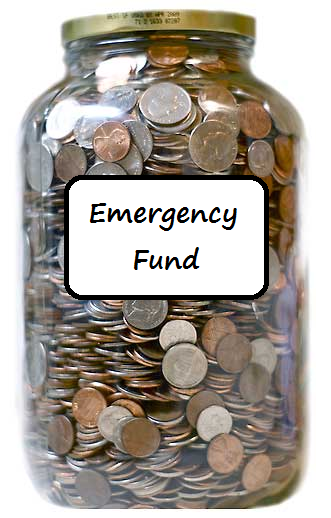
Emergency Fund


Emergencies and disasters are inevitable. Accept it or not they can happen to anyone and they ignore whatever status you have in life. Establishing an emergency fund is the ideal solution as a financial cushion during emergency like sudden job loss, home and car repairs, medical emergencies, and natural disasters such as major typhoons. The worst thing that you want to do during emergencies is to borrow money from other people or use credit card which can create additional problems. It is more economical to prepare in the present for the sudden needs of the future rather than maintaining a wait and see attitude.

        A good rule of the thumb is to tap your emergency fund only when your income is disrupted. The requirements for your emergency fund are: it must be liquid; it should be earning interest; and it should not be subject to any losses. Given these, your choices are either a savings account or a money market fund.

        Most financial planners recommend that you save at least six months to one year worth of your monthly expenses for an emergency fund. Having an emergency fund will help us meet our financial obligations while looking for another source of income. How much of a cushion is enough? It depends on what you spend each month. The key word here is “spend.” It doesn’t matter what you earn.

Tips on building your emergency fund:

  1. Compute your monthly expenses and decide how much to save.
  2. Open a bank account for your emergency fund. Make sure that this account is specifically earmarked for emergency expenses and should not be mixed with your other needs.
  3. Commit and save. You start with small pockets of savings and gradually increase it periodically once you the habit of savings. Use step goals like saving P500 every pay day increasing it to P1,000. The key here is to be consistent and resist the temptation of spending your emergency fund for other things that cannot be justified as emergencies.
  4. Look for other sources in addition to your regular income.